Ferrari · Italy
Ferrari F430
2004–2009Three-view archive
Exterior and cockpit.
Museum record
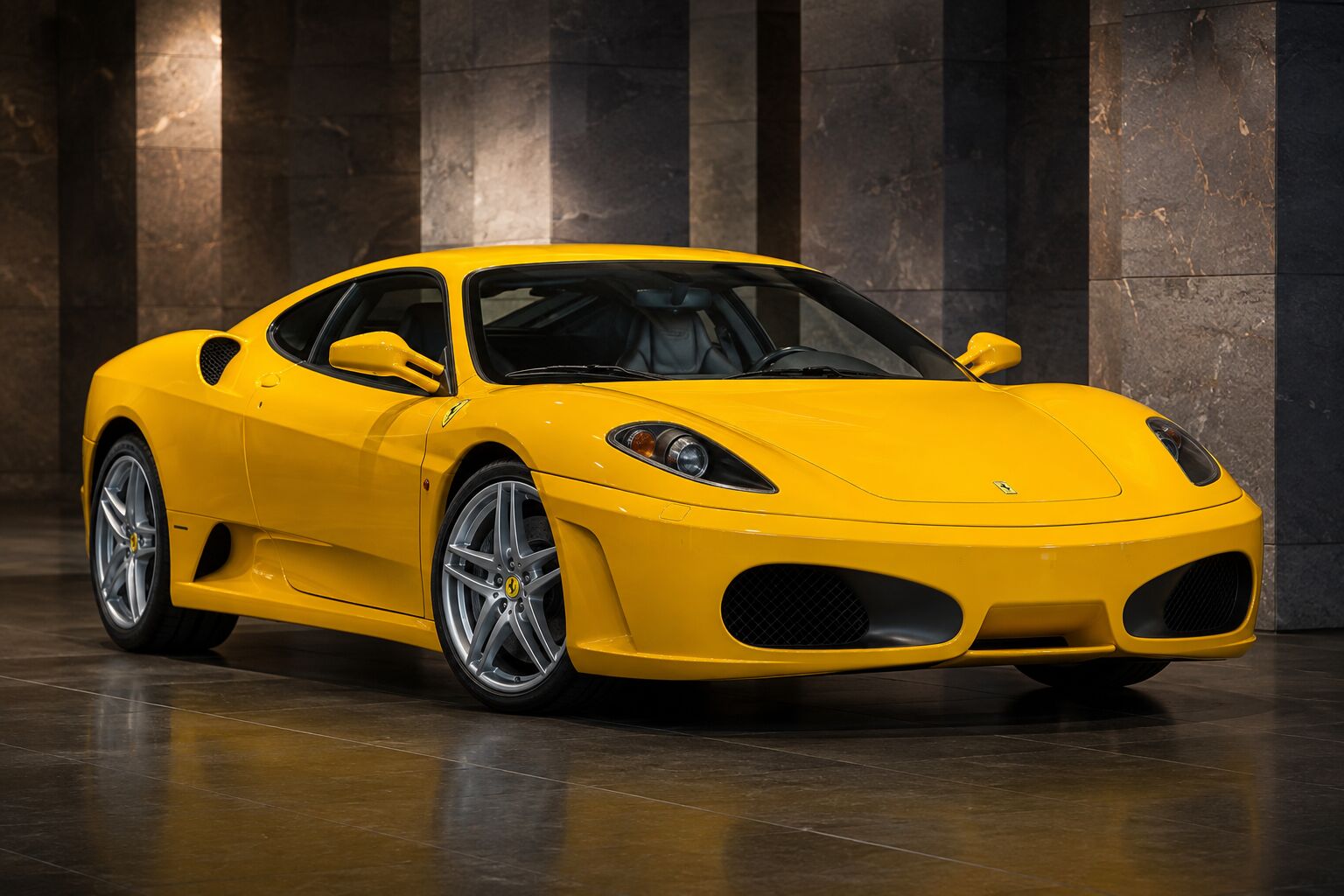
The Ferrari F430 combined a new 490-horsepower V8 with Formula 1-derived electronics, introducing the E-Diff and steering-wheel manettino while retaining the compact drama of Ferrari's mid-engined berlinetta lineage.
- Engine
- 4.3-liter naturally aspirated DOHC V8
- Power
- 490 hp at 8,500 rpm
- Top speed
- 196 mph (315 km/h)
- Production
- Approximately 10,500 coupés
Why it matters
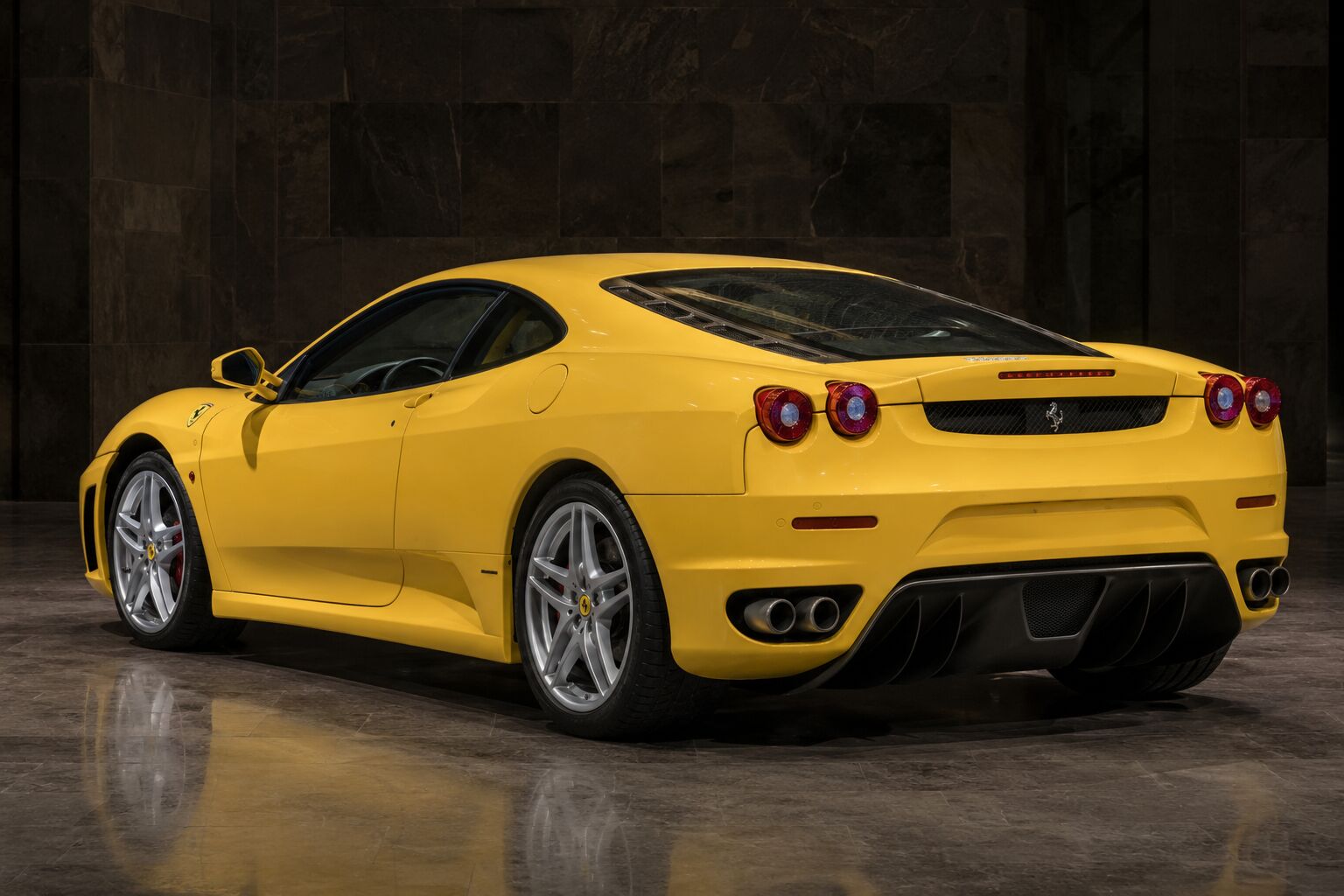
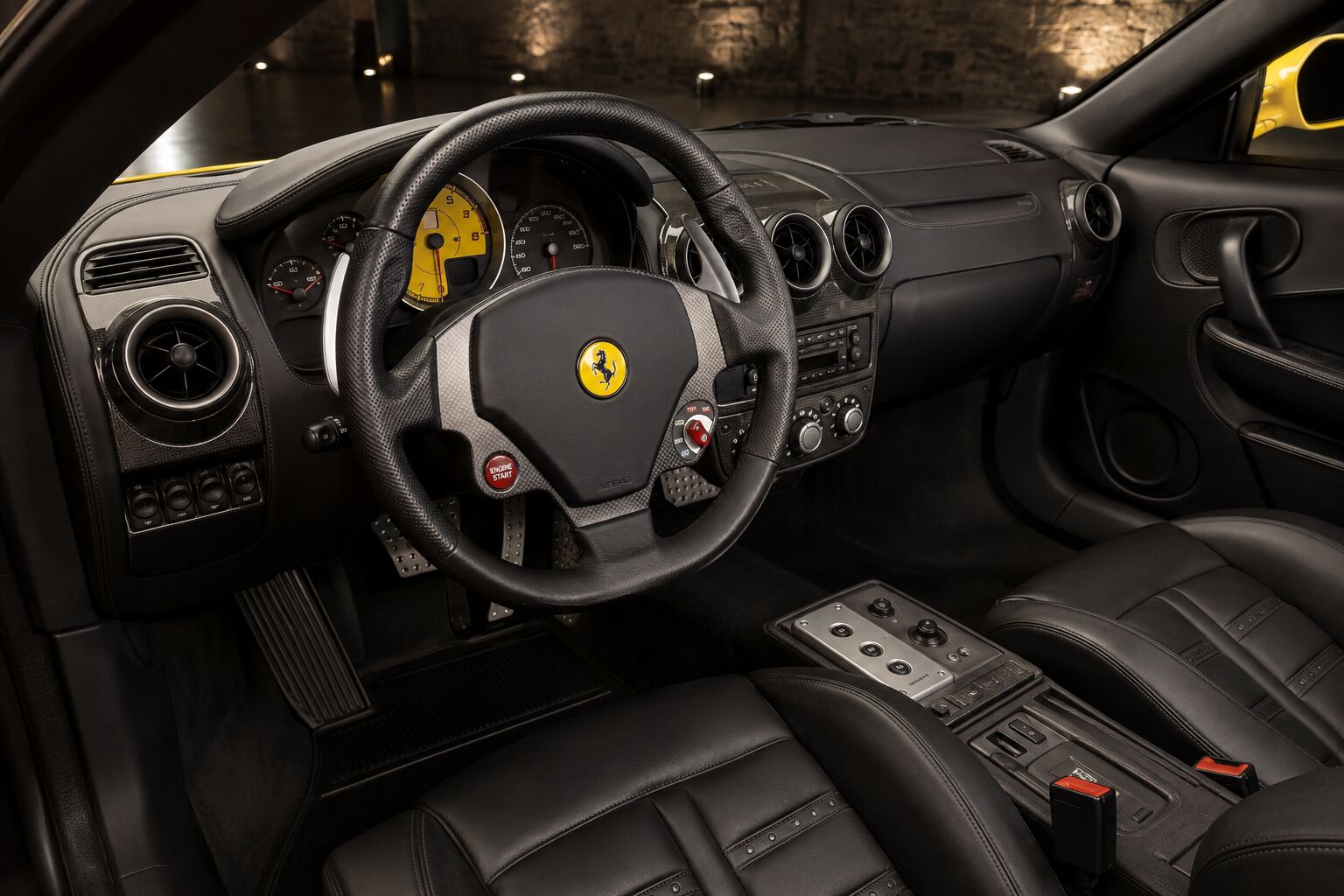
Revealed at the 2004 Paris Motor Show, the F430 represented far more than a restyled 360. Its new 4,308 cc flat-plane-crank V8 ended decades of evolution from the original Dino-family architecture, producing 490 hp at 8,500 rpm and 465 Nm of torque. For the first time in a production Ferrari, an electronically controlled rear differential—the E-Diff—actively distributed torque between the driven wheels. The steering-wheel manettino, adapted from Formula 1, allowed the driver to coordinate damper, stability-control, traction-control, differential and transmission settings without taking a hand from the wheel. Buyers could choose Ferrari's much faster six-speed F1 paddle-shift transmission or a now highly coveted six-speed gated manual. Pininfarina retained the 360's aluminum structure but gave the F430 prominent oval front intakes inspired by the 156 F1 car, Enzo-like high-mounted taillights, a glass engine cover and a highly developed rear diffuser. It accelerated from rest to 100 km/h in approximately 4.0 seconds and reached 315 km/h. Carbon-ceramic brakes became an important option and later standard equipment. Approximately 10,500 berlinettas were produced before the 458 Italia arrived. By integrating sophisticated vehicle dynamics with a naturally aspirated, high-revving V8, the F430 established the technical vocabulary of the modern Ferrari supercar.
Private market
Interested in a Ferrari F430?
Register privately. Identities remain confidential unless both parties choose to connect.