Ferrari · Italy
Ferrari Testarossa
1984–1991Three-view archive
Exterior and cockpit.
Museum record
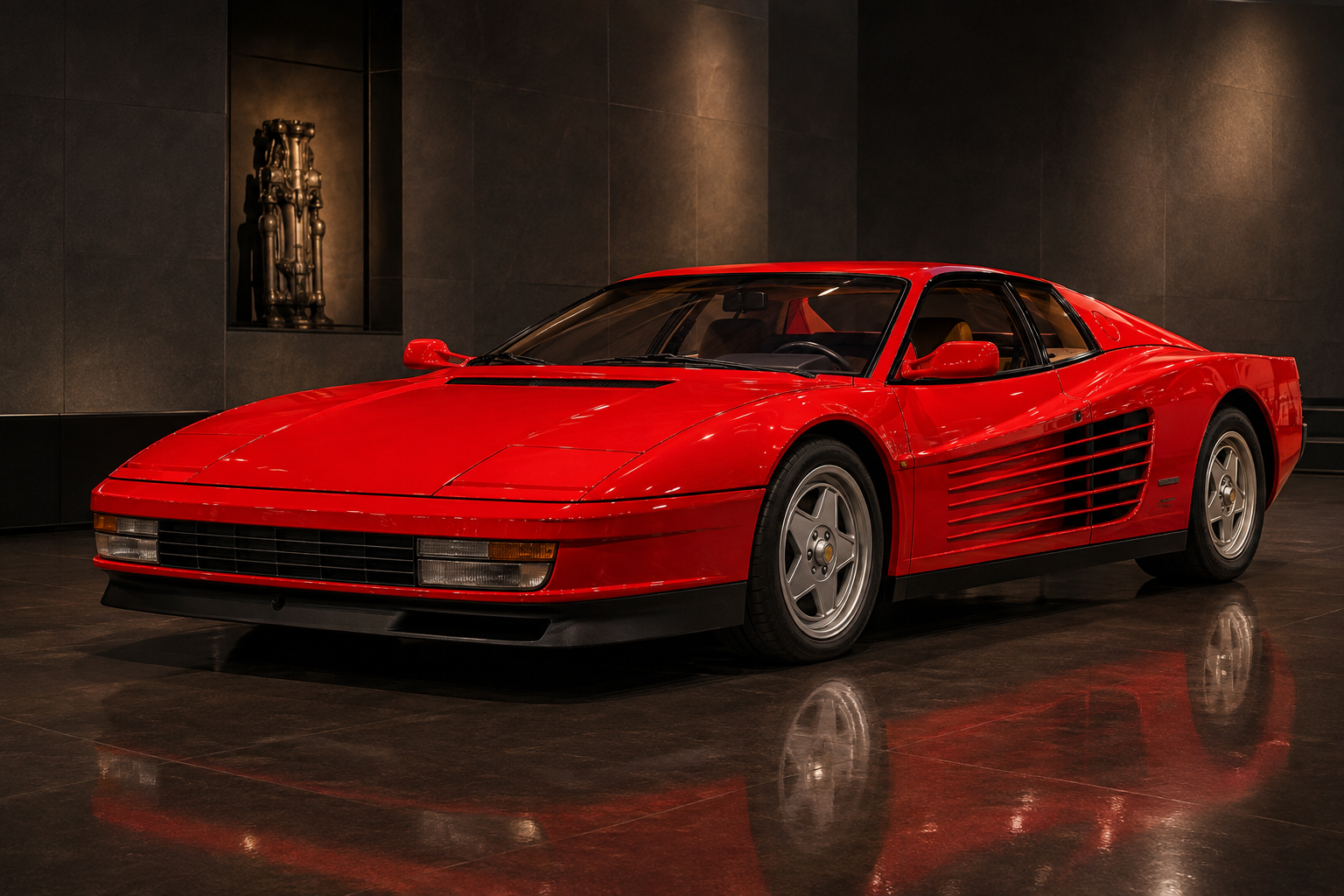
The original Ferrari Testarossa became a defining shape of the 1980s, pairing a 390-cv flat-12 with Pininfarina's extraordinarily wide, side-straked grand-touring silhouette.
- Engine
- 4.9-liter flat-12
- Power
- 385 hp (390 cv) at 6,300 rpm
- Top speed
- 180 mph (290 km/h)
- Production
- 7,177
Why it matters
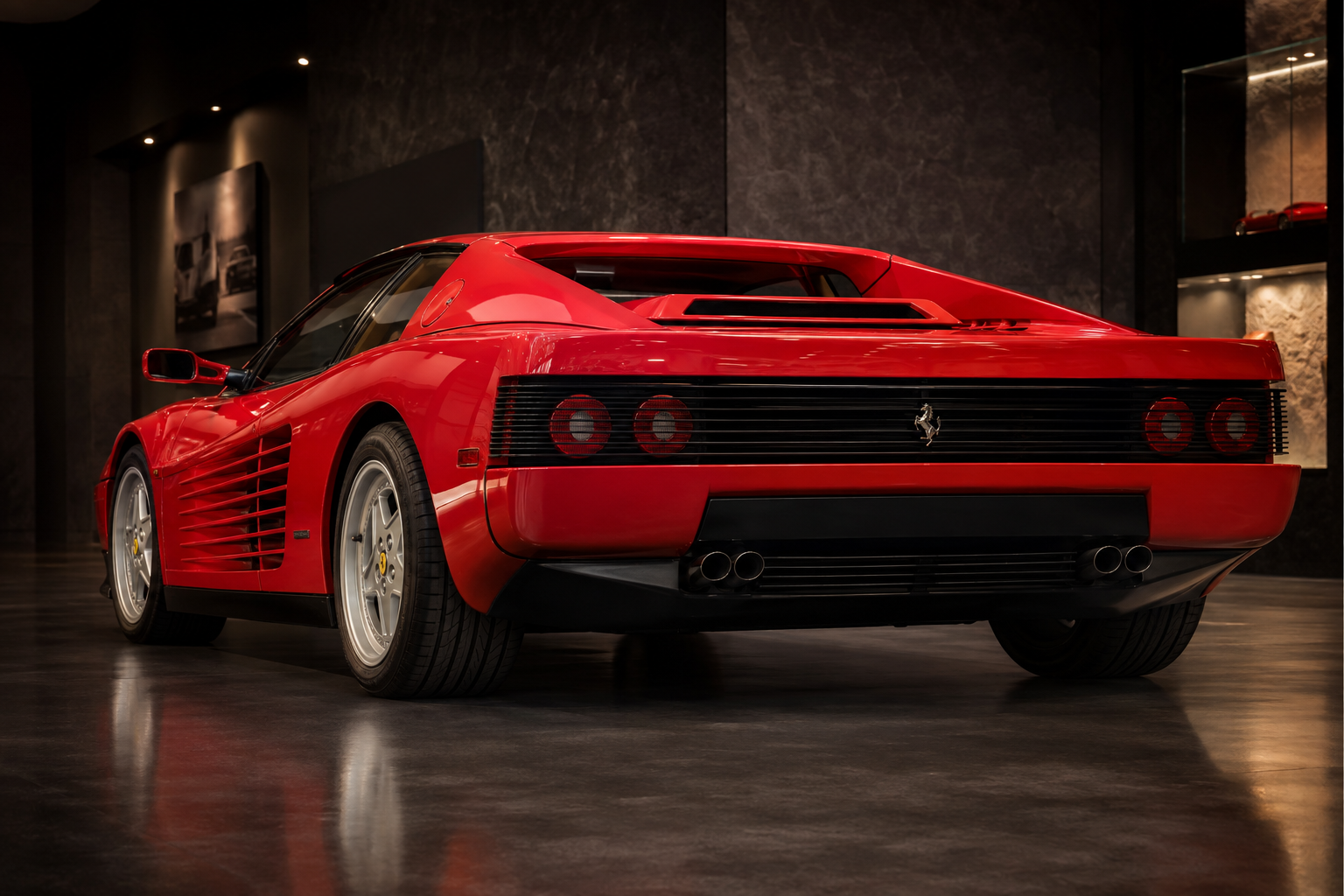
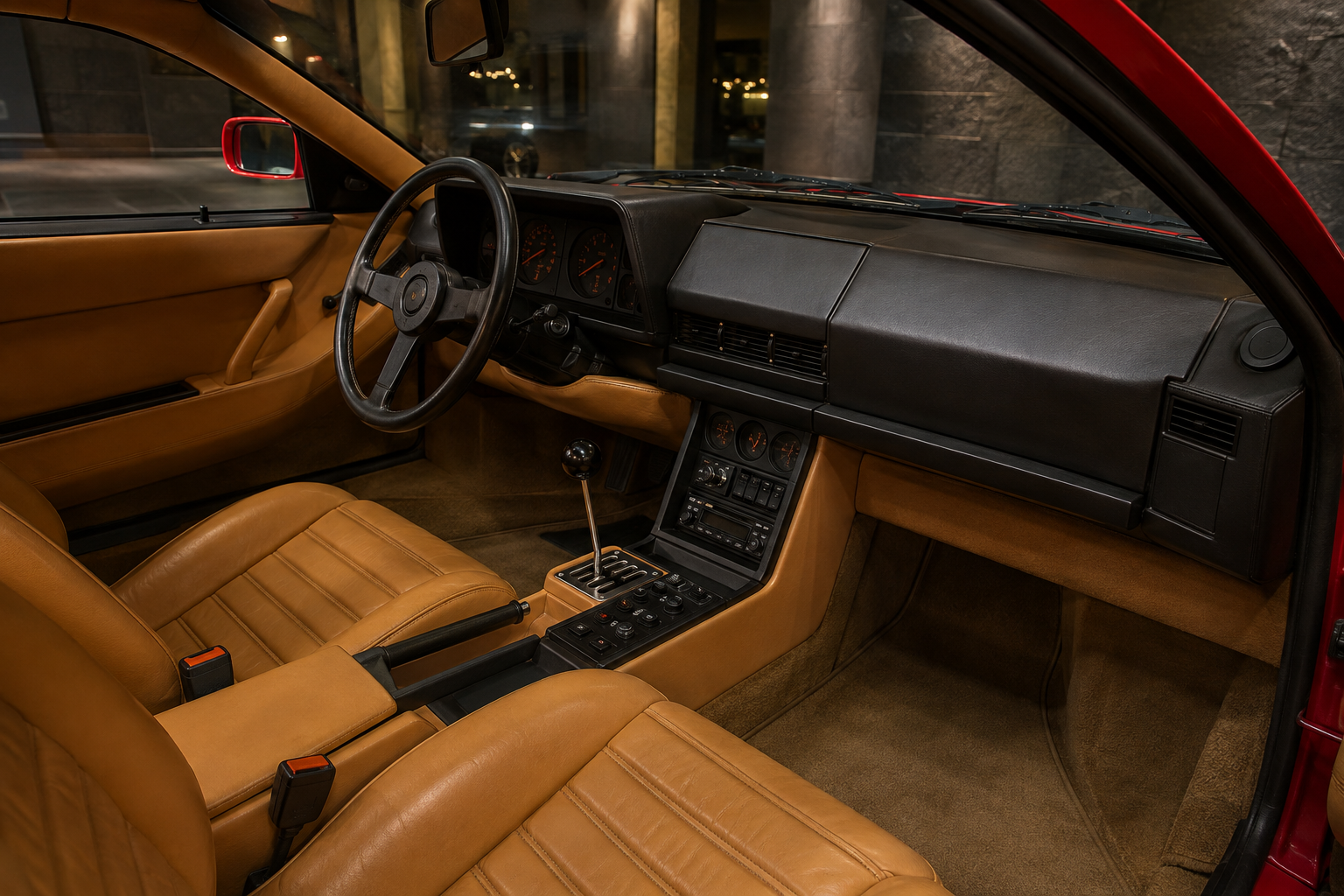
Unveiled at the 1984 Paris Motor Show, the Testarossa replaced the 512 BBi and solved several of its packaging and heat-management compromises. Its 4,943 cc, four-valve flat-12 produced 390 cv and sat longitudinally behind the cabin, driving through a five-speed gated manual transmission. Pininfarina moved the radiators from the nose to the rear quarters, allowing a more comfortable cabin and reducing heat transfer to the occupants. The resulting side intakes required exceptionally wide rear bodywork; horizontal strakes covered their openings to satisfy regulations while creating one of the most recognizable profiles in automotive history. Early cars carried a single high-mounted driver's mirror and center-lock wheels, while later examples adopted two conventionally positioned mirrors and five-lug wheels. The broad rear grille concealed paired round taillamps and visually emphasized the car's width. Ferrari built 7,177 Testarossas before the substantially revised 512 TR arrived, making it both a major commercial success and an enduring cultural symbol through appearances in television, film and popular design. The original Testarossa must be distinguished from its 512 TR and F512 M successors, which receive separate museum exhibits.
Private market
Interested in a Ferrari Testarossa?
Register privately. Identities remain confidential unless both parties choose to connect.