Ferrari · Italy
LaFerrari
2013–2016Three-view archive
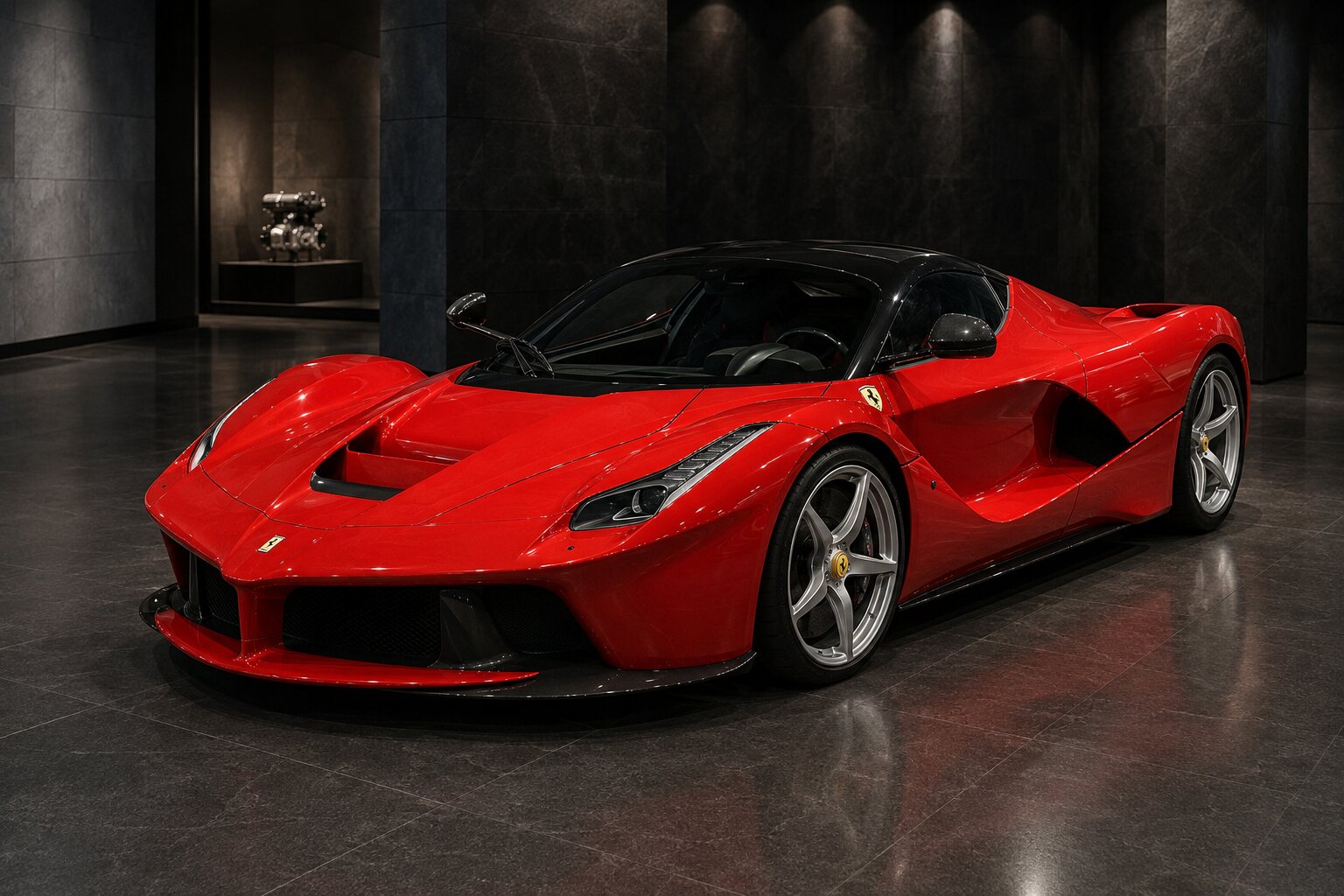
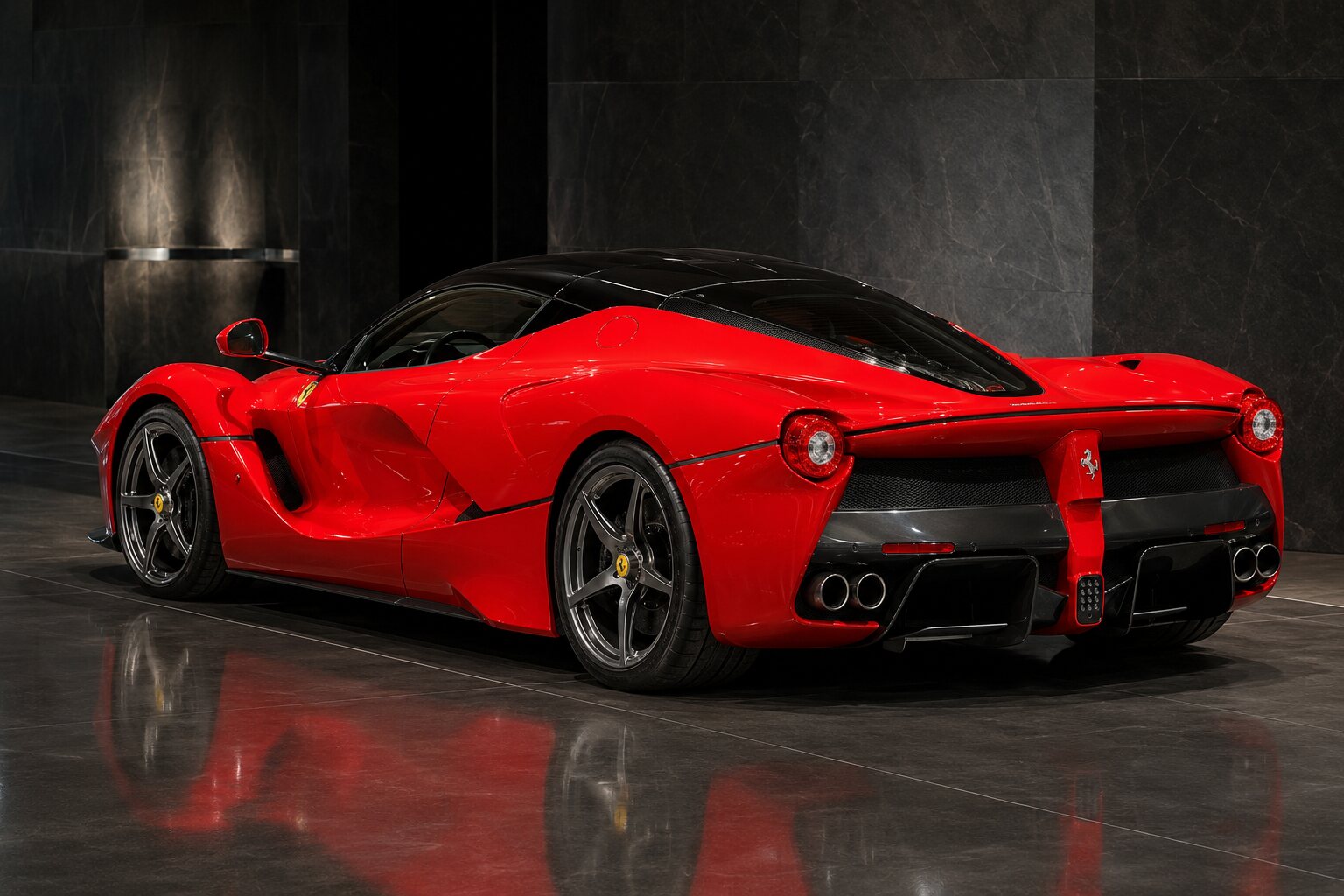
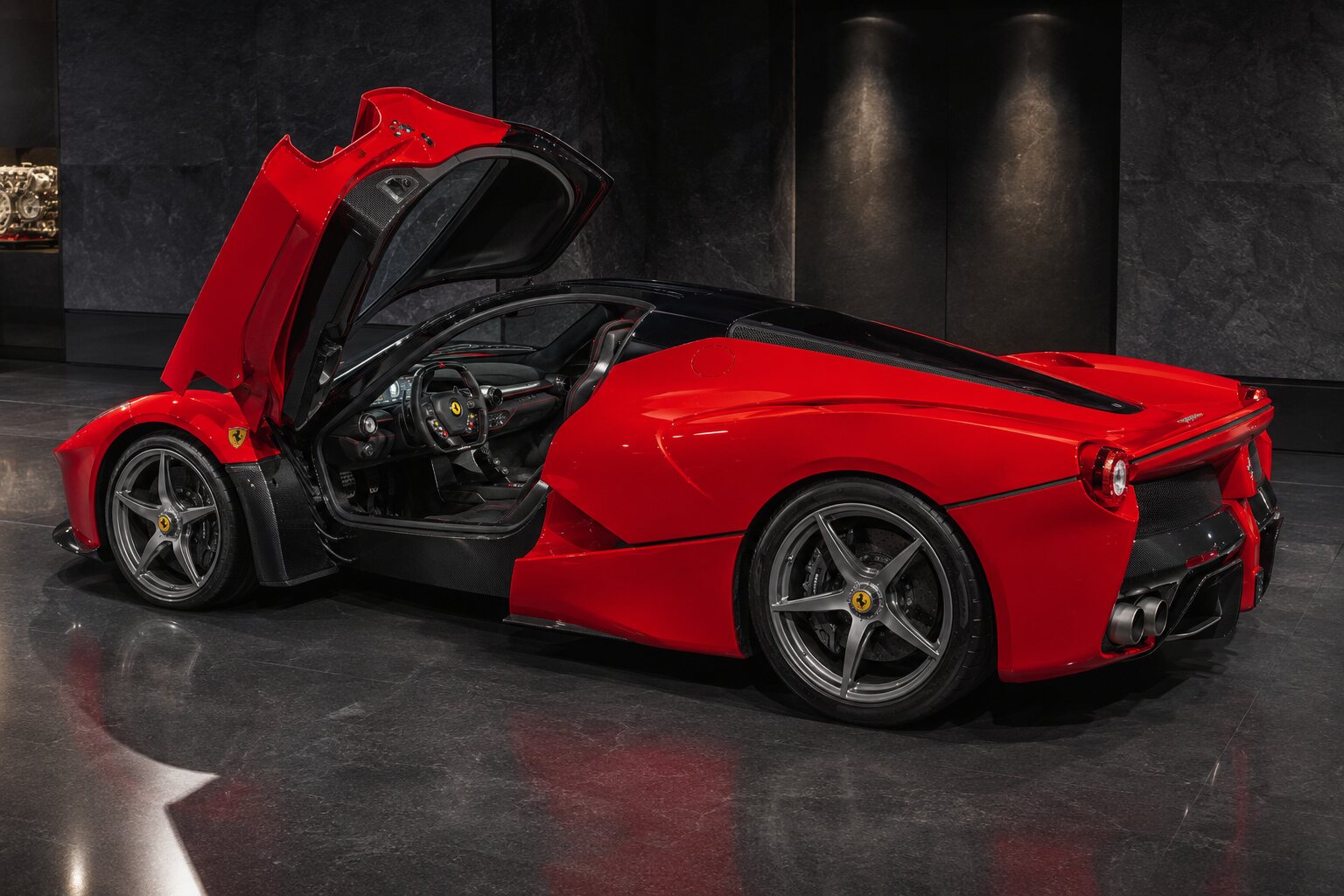
Exterior and cockpit.
Museum record
LaFerrari united a 789-horsepower naturally aspirated V12 with Formula 1-derived HY-KERS assistance for 950 combined horsepower, becoming Ferrari's first production hybrid flagship.
- Engine
- 6.3-liter naturally aspirated V12 with HY-KERS
- Power
- 950 hp combined
- Top speed
- 217+ mph (350+ km/h)
- Production
- 499 customer cars, plus 1 charity example
Why it matters
Unveiled at the 2013 Geneva Motor Show, LaFerrari succeeded the Enzo as the most technologically advanced road car Ferrari had created. Its 6,262 cc naturally aspirated V12 produced 789 hp at 9,000 rpm and worked with a 161 hp electric motor integrated into the seven-speed dual-clutch transmission, delivering 950 hp and more than 900 Nm through the rear wheels. The HY-KERS system recovered energy under braking and supplied immediate torque rather than prioritizing electric-only driving, applying Formula 1 hybrid principles directly to a road car. Ferrari constructed the carbon-fiber monocoque in its racing department using four different carbon composites, while fixed seats formed part of the structure and the pedal box and steering wheel adjusted around the driver. Active aerodynamic devices beneath the nose, along the underbody and at the rear continuously balanced downforce and drag with the hybrid, braking and stability systems. Ferrari quoted 0–100 km/h in under three seconds, 0–200 km/h in under seven seconds, 0–300 km/h in 15 seconds and a maximum speed above 350 km/h. Production was originally limited to 499 customer coupes; Ferrari later built a 500th example for a charity auction supporting earthquake relief in central Italy. LaFerrari established the hybrid-performance philosophy that would later influence the SF90 Stradale, 296 GTB and F80.
Private market
Interested in a LaFerrari?
Register privately. Identities remain confidential unless both parties choose to connect.